What Causes Sliding Door Rollers to Fail?
A sliding door that suddenly needs a hard shove is more than an everyday annoyance. It can scrape the track, become difficult to lock and, in some cases, place extra strain on the glass and frame. Homeowners often ask what causes sliding door rollers to fail because the problem can seem to appear overnight. Usually, though, the rollers have been wearing down for some time.
Sliding door rollers sit beneath the door and carry its weight as it moves along the track. When they are in good condition and correctly adjusted, a heavy glass door should glide with surprisingly little effort. When they fail, the door may drag, stick, wobble or come off its normal path.
What causes sliding door rollers to fail?
The most common cause is simple wear and tear. Rollers work every time the door opens or closes, often carrying the weight of a large glass panel. Over years of use, roller wheels can wear flat, bearings can break down and the roller housing can weaken or corrode. Older doors may have original rollers that have done their job for decades and are now at the end of their working life.
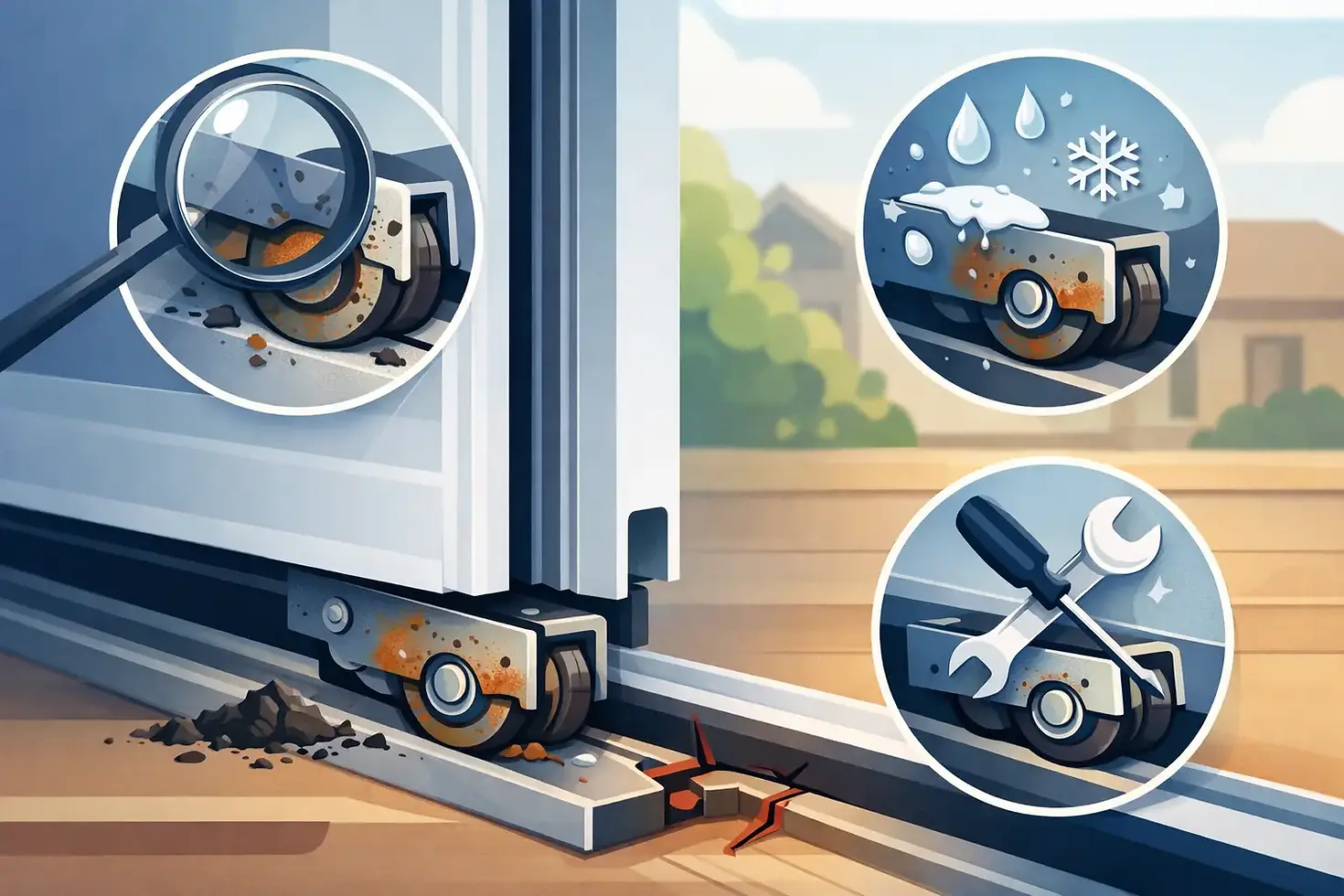
In Perth homes, dirt, sand and moisture can speed up that process. Tracks collect more than most people realise, particularly around patios, balconies and garden entrances. Fine grit works its way into the wheel area and acts like sandpaper. Rather than rolling smoothly, the wheel begins to drag across the track. This creates resistance, wears the roller faster and can eventually damage the track itself.
Roller failure is also often connected to a door that is out of adjustment. If the door sits too low, too high or unevenly on one side, its weight is not distributed properly between the rollers. One roller may then carry far more load than the other. The result is uneven wear, poor movement and a door that feels heavier at one end.
Worn wheels and failed bearings
Most rollers contain a wheel and bearing system designed to turn freely under load. As bearings wear, seize or lose their smooth movement, the wheel may stop rotating properly. The door then slides across the track instead of rolling on it.
You might notice a grinding sound, a rough vibration through the handle or a dark wear mark on the track. These are signs worth addressing early. Continuing to force the door can turn a straightforward roller replacement into a larger repair involving the track or carriage assembly.
Corrosion and moisture damage
Sliding door rollers are fitted low in the frame, where moisture, condensation and rainwater can collect. Coastal air can also contribute to corrosion over time. Once metal components rust, the roller can become stiff, weak or completely seized.
Corrosion is not always obvious from above. A door may look fine externally but feel difficult to move because the roller assemblies underneath are deteriorating. If the door has been getting progressively harder to slide, corrosion may be part of the issue, especially with older aluminium sliding doors.
Dirty or damaged tracks
A dirty track does not automatically mean the rollers have failed, but it can cause and worsen roller problems. Leaves, pet hair, dust, grit and small stones can block the path of the wheels. Household cleaners can remove surface dirt, but built-up debris in corners and around the wheel path is often harder to clear.
A bent, pitted or badly worn track creates another issue. Even new rollers will not perform properly if they have to travel over a damaged surface. In some cases, the track can be repaired or fitted with a track cap. In more severe cases, track replacement may be the better long-term option. The right repair depends on how deep the damage is and whether the door frame itself remains sound.
Incorrect adjustment or past repairs
Sliding doors need correct height and alignment to operate well. Adjustment screws allow the door to be raised or lowered, but adjusting a door with worn rollers is not a lasting fix. It may temporarily reduce the scraping, yet it does not repair collapsed bearings, cracked wheels or bent roller housings.
Past repairs can also contribute to trouble when unsuitable rollers are fitted or the door is not aligned after replacement. Sliding door systems vary in wheel size, carriage design, frame profile and load capacity. A specialist should identify the correct parts for the door, replace components as needed and adjust the door so it closes, locks and slides properly.
Signs your sliding door rollers need attention
A stiff door is the obvious warning sign, but roller problems can show up in several ways. The door may need lifting to move, scrape along the bottom track or feel as though it catches at the same point every time. It may also roll unevenly, rattle in the frame or leave metal shavings and dark residue in the track.
Pay attention if the door no longer meets the lock cleanly. A door that has dropped due to failing rollers can sit out of line with the latch, making it difficult to secure. For a patio door, that affects both everyday convenience and home security.
Do not assume that a spray lubricant will solve the problem. Lubricant can help a clean, functioning track, but it cannot restore worn bearings or reshape a flat-spotted wheel. Some products also attract dust and grit, which can leave the track dirtier over time. If the door remains heavy after a basic clean, it needs a proper inspection.
Why forcing a stiff sliding door makes damage worse
It is tempting to keep using the door by pulling harder. Unfortunately, a heavy door transfers that force through the handle, frame, rollers and track. The track can become scored or flattened, while the wheel may break further under load. Glass doors are particularly heavy, so forcing them can make an already misaligned panel harder to control.
This is one reason timely repairs can save money. Replacing worn rollers before the door has badly chewed up its track is generally simpler than repairing both systems. It also restores the door’s everyday function, so opening up the patio, letting in fresh air or moving between rooms does not become a two-handed job.
Can sliding door rollers be repaired or do they need replacing?
It depends on the condition of the roller assembly. In practice, rollers with seized bearings, worn wheels, corrosion or damaged housings are usually replaced rather than repaired. Replacement gives the door a reliable running surface and avoids putting a worn component back into service.
The track also needs to be assessed at the same time. A clean, undamaged track may only need attention and correct adjustment after new rollers are fitted. If it has deep grooves or is badly damaged, further track repair may be needed for the new rollers to last.
For homeowners, the key point is that a sticking sliding door is not always just a cleaning job. The door needs to be lifted safely, inspected from underneath and matched with suitable replacement parts. That is where a specialist repair service is useful, particularly for large glass panels or doors that have become difficult to lock.
Keeping replacement rollers working longer
Once a door is repaired, regular light cleaning helps prevent grit building up in the track. Vacuum loose dirt from the track and wipe it with a dry or lightly damp cloth. Avoid packing the track with heavy grease or oily products that can trap debris.
It also helps to deal with changes in door movement early. If the door begins to scrape, catch or feel noticeably heavier, book an inspection before the track suffers more wear. Small adjustments and early roller work are far easier on the door than months of forcing it open and shut.
Aussie Sliders repairs sliding glass doors, screen doors and tracks across Perth, with no call-out fee, free no-obligation phone quotes and a 12-month warranty on parts and labour. If your door is dragging, jamming or no longer locking properly, having the rollers and track checked can bring back the smooth, safe operation your home relies on.


Comments